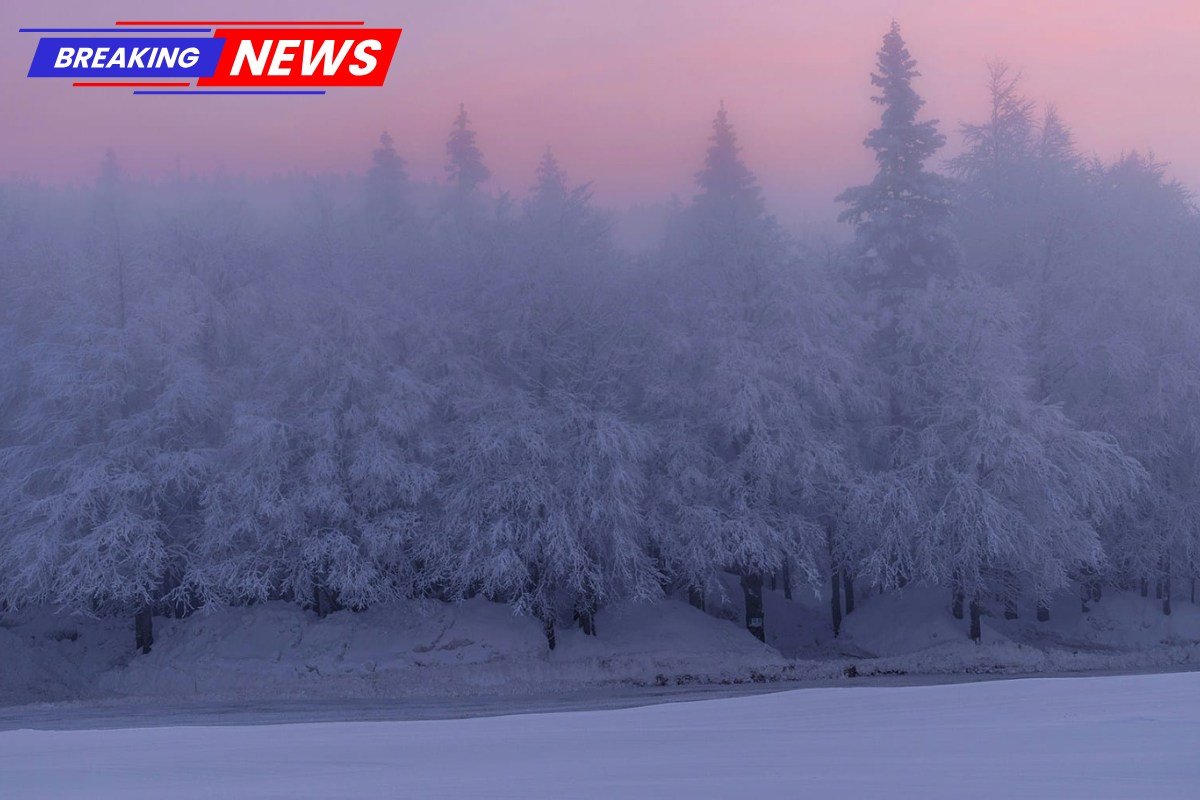
The day doesn’t announce itself with fireworks or calendar alerts. It just slips in quietly, stretching shadows a little longer, dimming the afternoon light faster than usual, and pulling the night over the Earth like a heavy blanket. Most people go about their routines none the wiser, but astronomers have long marked it as a turning point. This is the day the Sun seems to hesitate in the sky. The longest night of the year. The winter solstice.
Why Earth Has Seasons at All
It’s easy to assume seasons exist because Earth moves closer to or farther from the Sun. That’s a common myth, and an understandable one. In reality, Earth’s distance from the Sun barely changes throughout the year. The real culprit is tilt.

Earth spins on an axis tilted about 23.5 degrees. That tilt stays fixed as the planet orbits the Sun, and it changes how sunlight hits different parts of the globe over the year. When the Northern Hemisphere tilts toward the Sun, sunlight strikes it more directly, days grow longer, and summer sets in. When it tilts away, sunlight spreads out over a larger area, days shorten, and winter takes over.
NASA explains this orbital geometry in detail, breaking down how axial tilt—not distance—drives seasonal shifts across the planet https://science.nasa.gov/earth/seasons/.
The Moment Daylight Hits Its Minimum
As Earth continues its annual loop, it reaches an extreme position in December. For the Northern Hemisphere, this is when the Sun traces its lowest arc across the sky. Sunrise comes late. Sunset arrives early. Daylight feels hesitant, almost reluctant.

This moment is the winter solstice.
Astronomically speaking, it occurs when the Sun reaches its southernmost point relative to Earth’s equator. From that day onward, the Sun begins its slow climb north again. The change is subtle at first. A minute here, a minute there. But the direction has shifted.
In the Southern Hemisphere, the opposite happens. While the North experiences its darkest day, countries like Australia and Argentina see their longest day of the year, marking their summer solstice.

According to NOAA’s solar calculations, the timing of the solstice can vary slightly each year due to leap years and Earth’s elliptical orbit https://www.weather.gov/.
When the Winter Solstice Happens in 2025
In 2025, the winter solstice in the Northern Hemisphere is expected to fall on Sunday, December 21. The exact moment occurs when the Sun reaches its lowest apparent position in the sky, something astronomers can calculate down to the second.
Here’s how it breaks down:
| Event | Date (2025) | What It Means |
|---|---|---|
| Winter Solstice (Northern Hemisphere) | December 21 | Shortest day, longest night |
| Summer Solstice (Southern Hemisphere) | December 21 | Longest day, shortest night |
| Start of Astronomical Winter (North) | December 21 | Sun begins gradual return northward |
| Gradual Daylight Increase | After Dec 21 | Days lengthen minute by minute |
The U.S. Naval Observatory tracks these solar milestones annually and publishes precise astronomical data https://aa.usno.navy.mil/.
The Science Behind the “Longest Night”
Calling it the “longest night” isn’t poetic exaggeration. On the winter solstice, nighttime lasts longer than any other day of the year in the Northern Hemisphere. The farther north you go, the more extreme it becomes.
In cities like New York or London, daylight shrinks to just over nine hours. In northern Alaska or parts of Scandinavia, the Sun may not rise at all, a phenomenon known as polar night.
It’s also worth clearing up a common misconception. The winter solstice does not mean Earth is farther from the Sun. In fact, Earth reaches perihelion—its closest point to the Sun—in early January. The cold lingers after the solstice because land and oceans take time to lose stored heat, a delay scientists call seasonal lag, documented by the U.S. Geological Survey https://www.usgs.gov/.
How Ancient Civilizations Understood the Solstice
Long before telescopes and satellites, ancient societies noticed this peculiar pause in the Sun’s movement. Stonehenge in England aligns precisely with the winter solstice sunset. In ancient Rome, Saturnalia marked a period of feasting and role reversals around this time. Nordic cultures celebrated Yule, lighting fires to symbolically invite the Sun’s return.
For agricultural communities, the solstice was reassurance. Darkness had peaked. Light would return. Crops might be dormant, but the cycle wasn’t broken.
Even today, many winter traditions—from Christmas lights to New Year celebrations—carry echoes of these older solar rituals, whether people realize it or not.
Why the Solstice Still Matters Today
Modern life runs on clocks and screens, not Sun dials. Yet the winter solstice still plays a quiet role in how we experience the year.
Mental health professionals often note that seasonal affective disorder tends to peak around this period, as limited daylight affects circadian rhythms. Energy demand spikes too, with heating systems working overtime during the darkest stretch of the year.
From a planetary perspective, the solstice is also a reminder of Earth’s precise cosmic choreography. A slight change in axial tilt, and the seasons as we know them wouldn’t exist.
What Happens After the Solstice
The day after the winter solstice doesn’t feel dramatically different. It’s not like you step outside and suddenly notice longer afternoons. But astronomically, the shift has already begun.
Each day gains a little more sunlight. By late January, the change becomes noticeable. By March, the balance tips again at the spring equinox, when day and night briefly equalize.
Think of the winter solstice less as an ending and more as a reset point. The darkest chapter closes. The slow return of light begins.
FAQs
Q. What is the winter solstice in simple terms?
It’s the day with the least daylight and the longest night of the year in a given hemisphere.
Q. Does the winter solstice mean it’s the coldest day of the year?
No. The coldest days usually come weeks later due to seasonal lag.
Q. Why does the date of the solstice change slightly each year?
Because Earth’s orbit isn’t exactly 365 days long, and leap years adjust the calendar.
Q. Do all places experience the solstice the same way?
No. Daylight changes vary by latitude, becoming more extreme closer to the poles.
Q. Is the winter solstice the same as the first day of winter?
Astronomically, yes. Meteorological winter, however, starts on December 1.