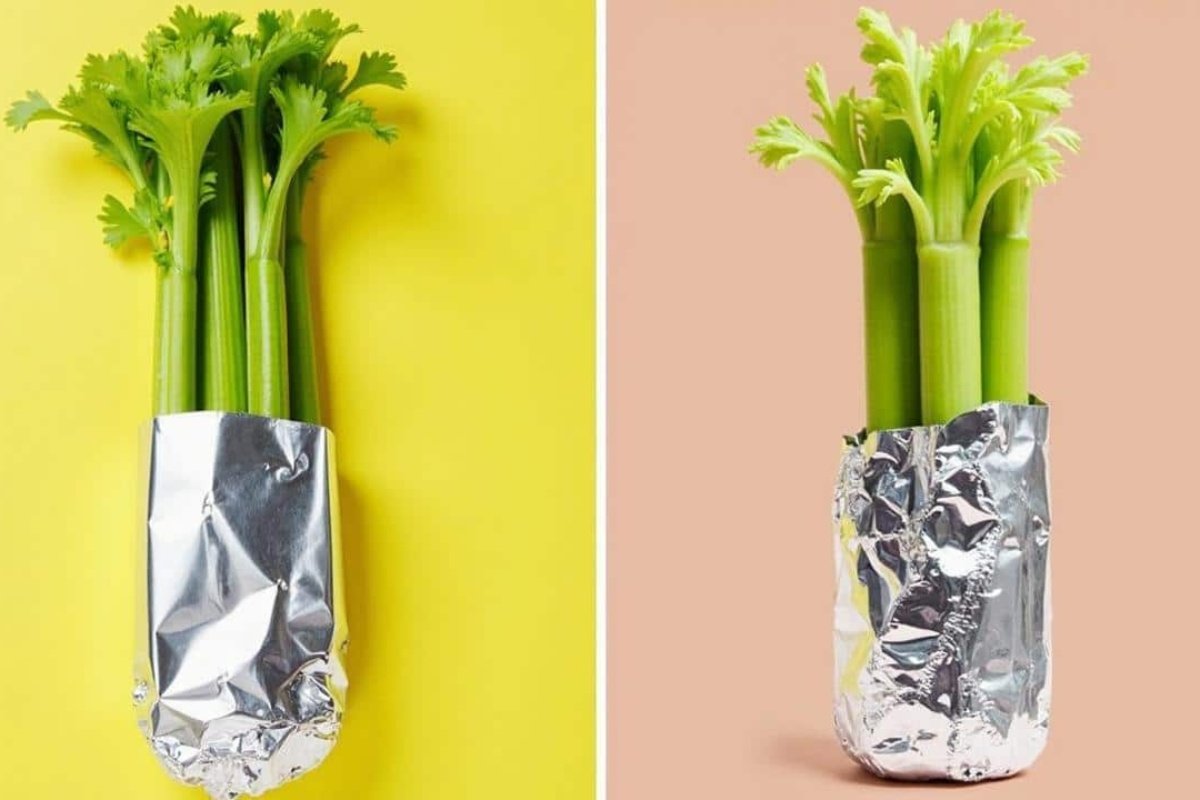
Celery is usually the first thing to give up in a crowded fridge. You buy it proud and upright, tuck it into the crisper, and by Thursday it’s sagging like it’s had a long week. Bitter edges. Limp ribs. Soup celery, if you’re being generous.
People swear by jars of water. Others cling to plastic bags like a life raft. Then there’s the trick chefs murmur about, the one that sounds like kitchen folklore until you try it: wrapping celery in aluminium foil. Weeks later, it still snaps. Loudly. The mystery isn’t whether it works. It’s why a thin sheet of metal beats everything else in your fridge.

I learned this the lazy way. One Sunday morning, half-awake, I found a forgotten foil-wrapped log on the top shelf. I expected mush. Instead, I peeled it back and met stalks that were cold, glossy, and stiff with moisture. They cracked under my knife like market-fresh celery. On the counter sat another bunch from the same shopping trip, left in plastic. Limp. Weepy. Same starting line. Very different finish.
Wrap celery in foil once and you start seeing vegetables differently.
The quiet physics behind celery’s crunch
Celery stays firm because of turgor pressure—water packed inside millions of plant cells, pushing outward against rigid cell walls. When those cells are full, the stalk stands tall. When water leaks out into the dry air of your fridge, the pressure drops and the whole thing slumps. Still green, still edible, but the snap is gone.

Refrigerators are dry places by design. Cold air circulates constantly, pulling moisture from anything uncovered. Leave celery bare and it dehydrates fast. Seal it tight in plastic and you solve one problem while creating another.
In a simple home test, I stored three bunches of celery: one loose in the drawer, one sealed in plastic, and one wrapped in foil. After seven days, the loose bunch had bowed stems and pale edges. The plastic-wrapped one held moisture but developed bitterness near the base. The foil-wrapped celery still cut with that sharp, clean crack celery lovers chase.
The difference comes down to a quiet tug-of-war between humidity, gas, and time.
Why aluminium foil beats plastic and water

Plastic bags trap everything: moisture, odors, and ethylene gas. Ethylene is a natural plant hormone released by many fruits and vegetables as they age. Celery is sensitive to it. Trap ethylene near the stalks and you speed up yellowing and off-flavors.
Leave celery loose and ethylene escapes just fine—but so does water. The stalk dries out, turgor pressure falls, and limpness follows.
Foil sits in the middle. Wrapped snugly but not sealed, it creates a humid pocket that slows water loss while letting gases drift out through the open ends. It’s breathable without being drying. The result is a small, stable microclimate celery actually likes.
Food scientists and extension services have long pointed out that humidity control is key for vegetables with high water content, like celery and lettuce, according to guidance from the USDA’s food storage recommendations https://www.usda.gov/. Aluminium foil, used loosely, happens to hit that sweet spot without fancy containers or daily maintenance.
How to wrap celery so it stays crisp for weeks
The method matters. Foil works because of how it’s used, not because it’s magical.
Start with the freshest bunch you can find. Look for tight ribs, pale green color, and no blackened ends. Trim off leafy tops—they lose water quickly and drag the rest of the stalk down with them. Leave the base intact if possible.
Lay the bunch on a sheet of aluminium foil, shiny side facing in. Wrap it snugly, like a baked potato, but don’t crimp the ends shut. Leave them slightly open so gases can escape. Slide it into the crisper drawer, where temperatures stay relatively steady.
If you’ve washed the celery, dry it thoroughly first. Moisture droplets trapped inside can turn from helpful humidity into slimy rot. The goal is moist air, not wet surfaces.
Check it about once a week. If you see heavy condensation pooling inside the foil, unwrap, blot gently, and rewrap with the ends open again. Stored this way, celery can last three to four weeks without turning rubbery.

Common mistakes that ruin good celery
A lot of well-meaning storage habits work against you.
Storing celery submerged in water makes it crisp initially, but over time it leaches flavor and invites slimy ends. Airtight plastic traps ethylene and bitterness. Pre-cut celery sticks are convenient, but cutting increases respiration and water loss, shortening shelf life dramatically.
Also, location matters. Keep celery away from apples, bananas, and tomatoes. These fruits release large amounts of ethylene, which accelerates aging even if your celery is wrapped correctly. The University of California’s postharvest research has documented how ethylene-sensitive vegetables deteriorate faster when stored near high ethylene producers https://postharvest.ucdavis.edu/.
If a stalk goes limp near the end of its run, all is not lost. A 10–15 minute ice bath can restore some turgor pressure. It won’t be brand new, but it’ll be good enough for hummus, stir-fries, or a proper mirepoix.
The role of cold in keeping celery alive
Wrapping helps, but temperature does heavy lifting.
Celery keeps best at 0–4°C (32–39°F). At these temperatures, respiration slows, sugars are preserved, and water loss drops. That’s why the crisper drawer works better than the fridge door, where temperatures swing every time someone goes hunting for a midnight snack.
Foil also helps buffer tiny temperature changes. Its reflective surface reduces rapid heat exchange during door openings, limiting condensation cycles that can damage texture. It’s a small effect, but over weeks, small effects add up.
The FDA’s food safety guidance emphasizes stable refrigeration temperatures as a key factor in produce longevity and safety https://www.fda.gov/.
What this tiny habit changes in your kitchen
When celery lasts, something shifts. You stop rationing stalks. You stop cooking out of guilt. That Tuesday soup tastes intentional, not rescued. Waste drops. Cooking feels easier.
There’s nothing fussy about this trick. No specialty containers. No daily water changes. Just a sheet of foil and a little understanding of how plants behave after harvest.
Storage isn’t a fight against time. It’s a negotiation. Foil just happens to be a very good negotiator.
Quick guide to foil-wrapped celery storage
| Key factor | What to do | Why it works |
|---|---|---|
| Humidity balance | Wrap in foil with ends slightly open | Slows water loss without trapping rot |
| Ethylene control | Avoid airtight plastic and ethylene-heavy fruits | Prevents bitterness and yellowing |
| Temperature | Store at 0–4°C in the crisper | Slows respiration and moisture loss |
| Maintenance | Check weekly, blot excess moisture | Extends shelf life up to 4 weeks |
FAQs
Does aluminium foil really keep celery fresh longer?
Yes. Foil creates a humid environment while allowing ethylene gas to escape, which helps celery stay crisp longer than plastic or loose storage.
Should celery be washed before wrapping in foil?
You can wash it, but it must be dried completely before wrapping to avoid trapped moisture and rot.
How long does celery last when wrapped in foil?
Often three to four weeks if stored properly in the crisper drawer.
Can this method work for other vegetables?
It works best for celery and similar high-water vegetables, but results vary depending on ethylene sensitivity.
Is foil better than reusable produce containers?
For celery, yes—because most containers are airtight and trap ethylene.